
What is foil and how is it used?
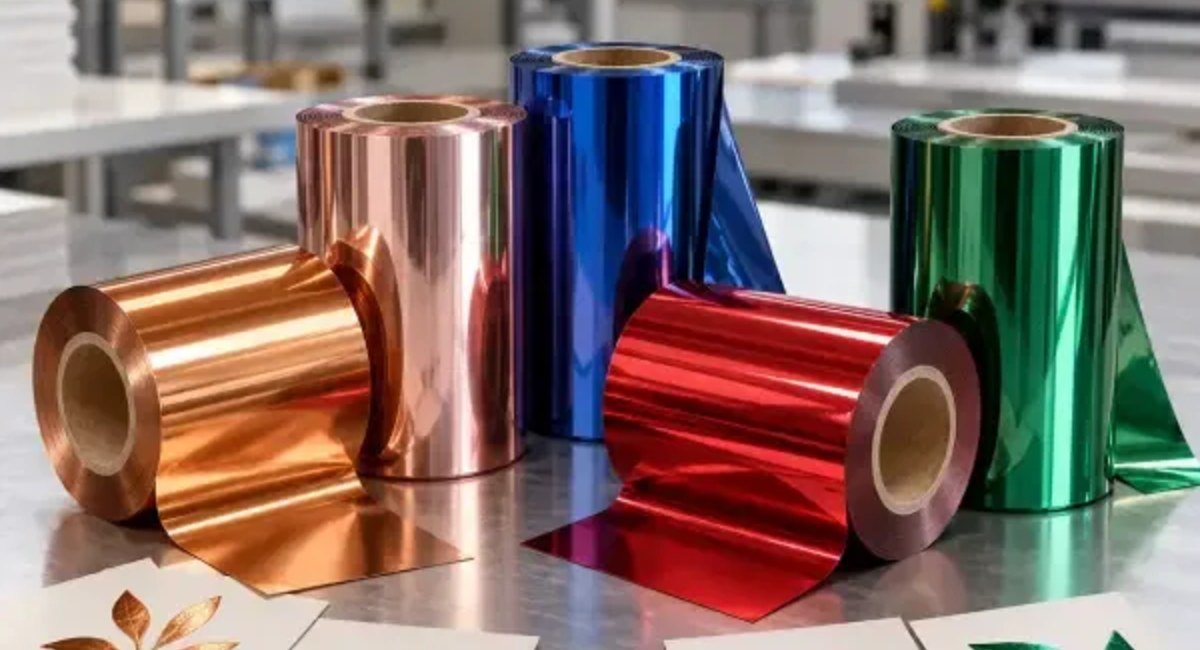
A business card with a gold logo, an invitation with shimmering lettering, a gift box with a silver pattern – these effects are usually achieved with foil. Foil gives print a metallic shine that no ink can reproduce. In this article we explain what foil is, which types exist and how to choose the right one for your job.
What is foil?
In printing, foil is a very thin multi-layer film. At the bottom there is a polyester (PET) carrier, followed by a release layer, a coloured lacquer, a metallised (usually aluminium) layer and an adhesive layer on top. Under heat, pressure or adhesive, the coloured metallic layer separates from the carrier and transfers to the paper, while the clear PET carrier is left as waste.
Foil types by application method
1. Hot stamping foil
The most common and highest-quality method. The design is made into a magnesium, copper or brass die. The die is heated to roughly 100–150 °C, the foil is placed between the die and the paper, and a press applies pressure. Foil transfers only where the raised areas of the die touch the paper.
- Advantages: sharp, precise lines; works beautifully on designer paper, board, soft-touch lamination, leather and more; can be combined with embossing
- Limitations: a die must be made, so very short runs can be expensive
The foils at Printshop are of this type – 64 cm wide rolls in gold, silver, bronze, colours, holographic and clear.
2. Toner foil
The design is printed with black toner on a laser printer or digital press. Foil is then placed over the print and run through a hot laminator – it sticks only to the toner.
- Advantages: no die needed, even a single copy is possible; fast and inexpensive
- Limitations: works only with toner prints (not inkjet); needs smooth paper; very fine lines and large solid areas may show gaps
3. Cold foil
On an offset or flexo press, a special UV adhesive is printed first, the foil is pressed onto it and cured with UV light. No heated die is used. Its biggest advantage is that you can print over the foil with regular inks, so any metallic colour (for example metallic green or purple) can be made from one foil.
- Used for: labels, packaging, magazine covers and other long runs
- Limitations: slightly less brilliant than hot foil; not cost-effective for small jobs
4. Digital foil
Digital embellishment presses (for example MGI JETvarnish or Scodix) first apply UV varnish by inkjet, then foil is bonded onto that varnish. No die is needed, and a thick varnish layer gives a raised 3D effect you can feel. Each copy can carry a different name or text – ideal for personalised invitations and certificates.
Foil types by appearance
- Metallic foil – gold, silver, bronze, copper, as well as metallic red, blue, green and purple
- Pigment foil – solid matte colour without metallic shine (such as white or black); great for white text on dark paper
- Holographic foil – a rainbow effect that changes with the light; for decoration and security features
- Clear foil – a colourless glossy finish that creates a spot-varnish effect
- Gloss and matte – the same colour can come as mirror-gloss or soft matte (for example matte silver)
Which paper works best with foil?
- Smooth and coated papers give the sharpest result
- Designer and textured papers look stunning with hot foil, though deep textures may need more pressure; toner foil leaves gaps on such papers
- Laminated surfaces can be hot-foiled – soft-touch lamination with gold foil looks especially premium. Choose a foil suitable for film surfaces
- Very soft, loose papers (such as newsprint) are not suitable for foil
Where is foil used?
- Business cards and corporate stationery
- Wedding and event invitations
- Certificates, diplomas and letters of appreciation
- Gift boxes, packaging and labels
- Book, notebook and planner covers
- Restaurant menus and branded bags
Practical tips for working with foil
- Avoid very fine lines and very small type in the design – they can fill in or break up
- Run a test on the same paper before the main job and adjust temperature and pressure
- The correct side of the foil must face the paper – usually the dull (adhesive) side
- Store foil in a dry, cool place away from direct sunlight
Summary
- Hot foil – the highest quality, requires a die
- Toner foil – no die, a quick solution for small jobs
- Cold and digital foil – for industrial and personalised work
- Choose the colour and effect to suit the paper
Printshop offers a wide range of hot stamping foils, designer papers, lamination film and binding materials. For details and prices, call us or write on WhatsApp: 050 890 11 44. Address: A. Salamzade street, Baku.